
A needles whisper on paper.

There is something gently reverent about slow stitching onto an antique envelope—a practice that feels less like handiwork and more like a conversation across time.
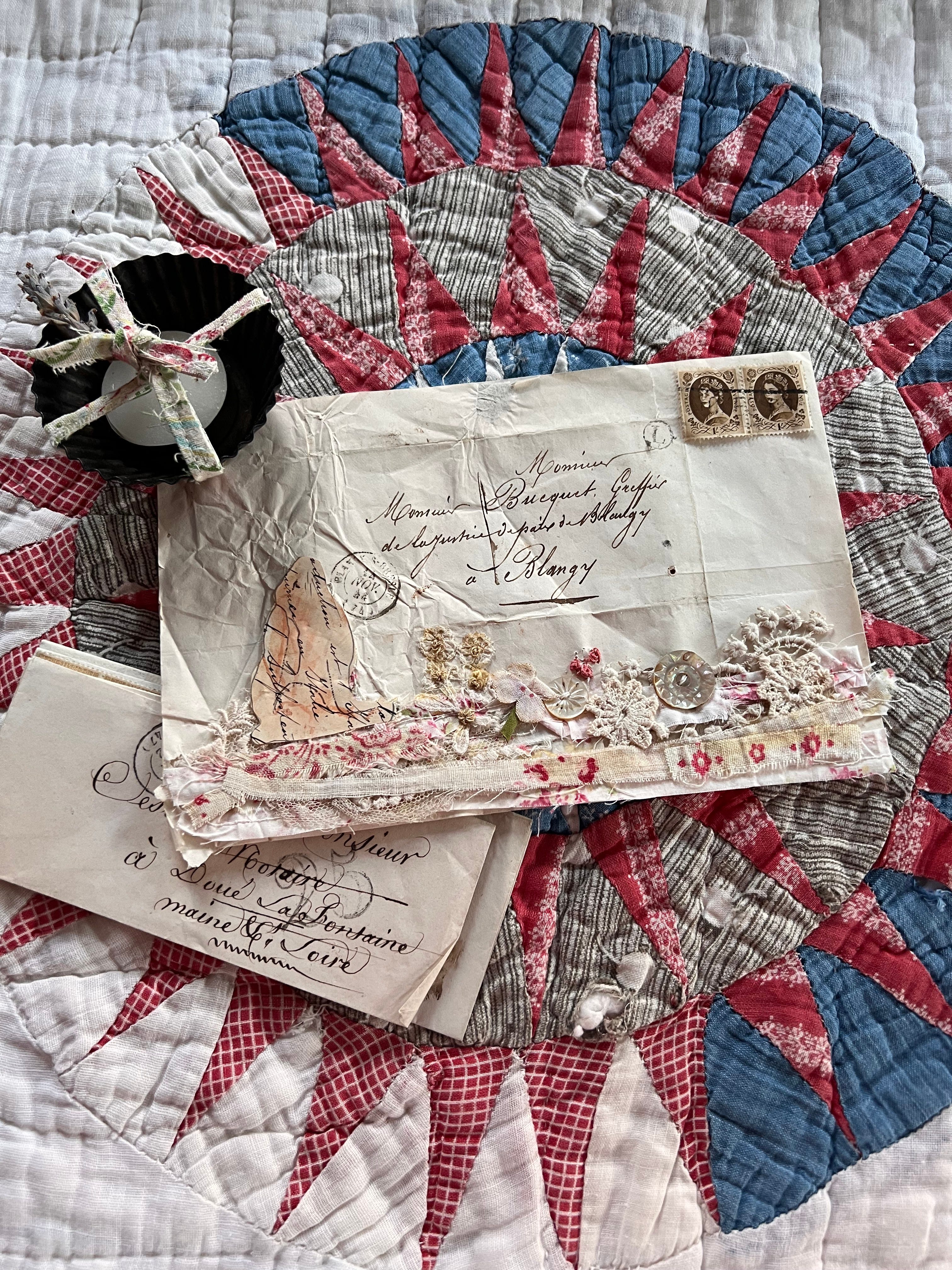
It begins with the envelope itself. Not just any paper, but one that has already lived a life: softened by years, perhaps slightly creased, its surface marked by faded ink, elegant handwriting, or the imprint of a long-forgotten journey. To choose such an object is to recognise its history. To work with it is to treat it with care.
That care is evident from the very first step. A sharp, fine needle is essential—delicate enough to pass cleanly through the fragile paper without tearing it. There is a soft precision in selecting the right tool. Thread, too, is chosen thoughtfully: soft cottons, aged tones, or subtle silks that complement rather than overpower. Nothing harsh, nothing hurried.
The act of stitching is slow by design. Each movement is intentional: the gentle push of the needle, the soft pull of the thread, the pause before the next stitch. It becomes rhythmic, almost meditative. There is no urgency to finish, no pressure for perfection. Instead, there is attention—an awareness of every tiny action.
What emerges is not simply decoration, but a layering of stories. The stitches do not erase the past; they trace alongside it. A line of thread might follow the curve of a handwritten name, echoing a gesture made decades before. Small knots and crossings create texture, catching the light, inviting the eye to linger. Imperfections are not flaws here—they are part of the language of the piece.
Part of the beauty lies in the search for these envelopes. They are found in gentle corners: second-hand shops, market stalls, boxes of old correspondence. Each one carries a sense of mystery. Who wrote it? Where did it travel? Why was it kept? To find one is to discover a fragment of someone else’s life.
Through slow stitching, that fragment is given new presence. What might have been discarded becomes something valued again. The process is respectful—a way of extending the life of an object without erasing its past.
When the work is complete, the transformation is striking in its subtlety. The stitched envelope, when framed, becomes a piece of art that invites close attention. It is not loud or demanding. Instead, it draws people nearer. They notice the fine lines of thread, the delicate punctures in the paper, the interplay between old ink and new stitch.
And perhaps that is the true essence of slow stitching on antique envelopes: it is an act of patience and care in a hurried world. It is about noticing, preserving, and reimagining. A simple envelope becomes something enduring—a small, beautiful testament to the value of time, touch, and thoughtful making.
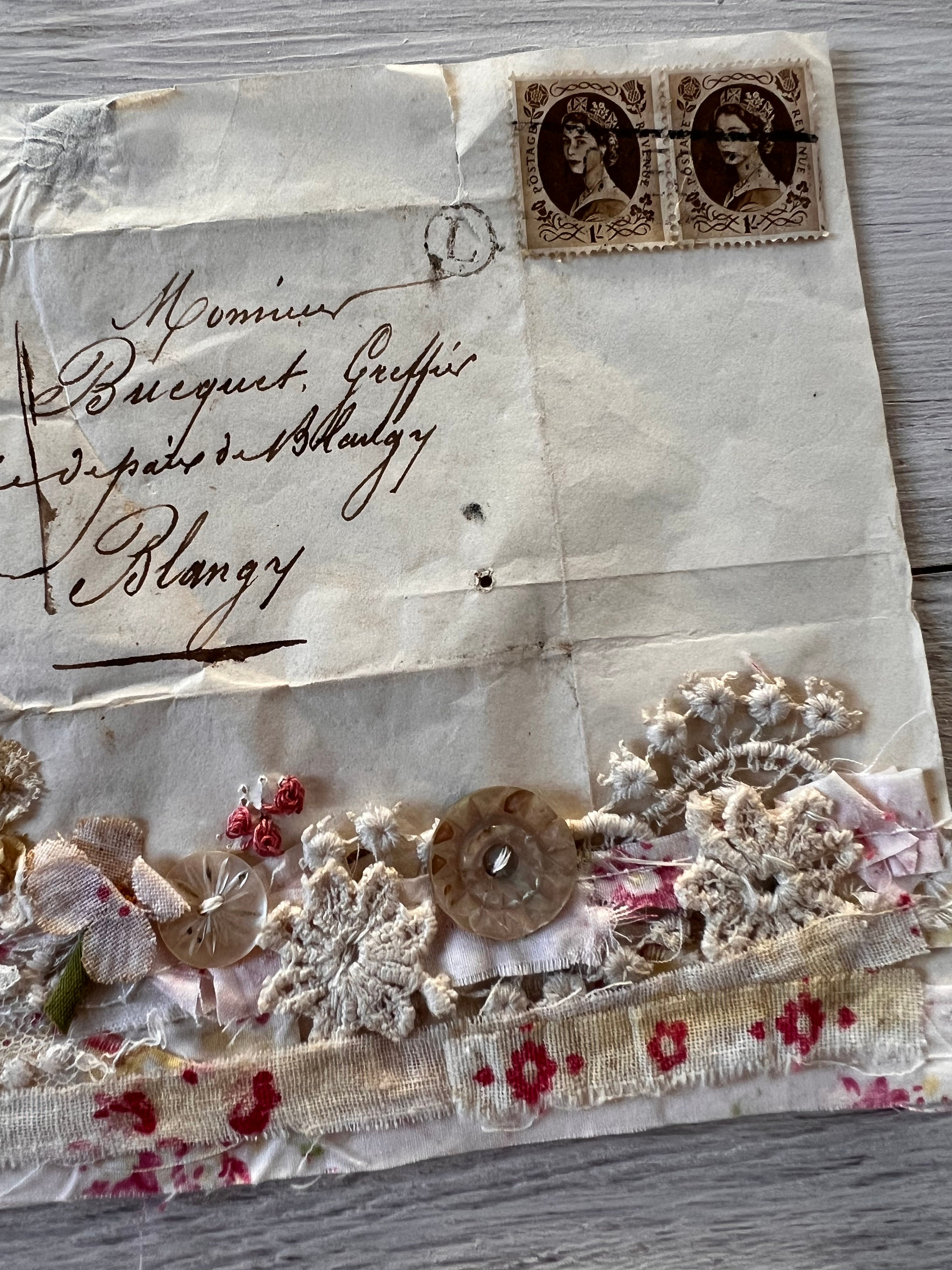
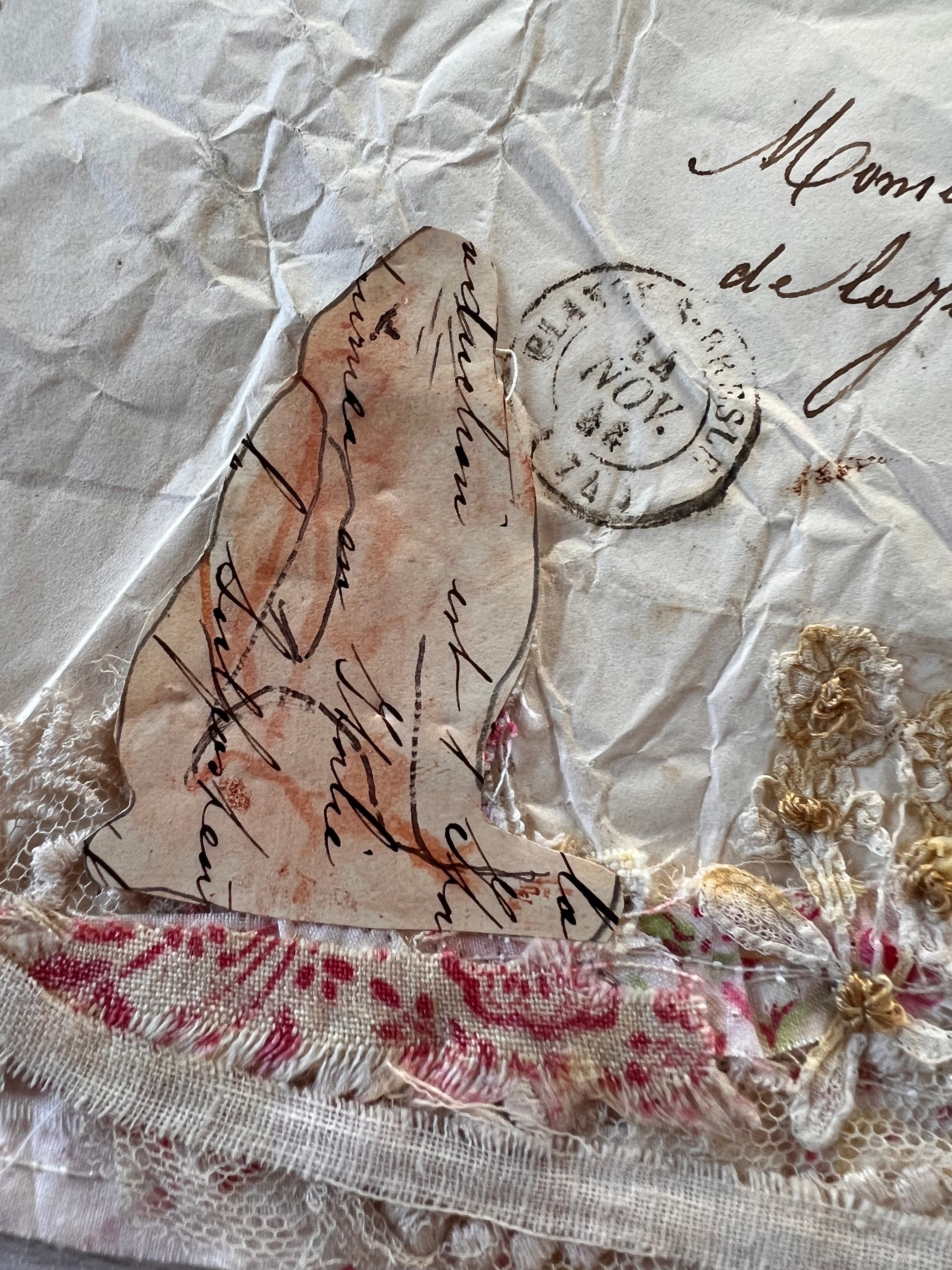
This is beautiful. I also love working with paper, fabric with needle and thread. I’m just getting started here.💗
the creases, the aged authenticity of the paper - just beautiful