
Gathering what time has touched.
Finding meaning in fragments and forgotten cloth

There is a quiet language spoken in thread.
Not the hurried language of seams made to hold, nor the efficient rhythm of production, but something slower—more attentive. A conversation between hand and cloth. Between what was, and what is still becoming.
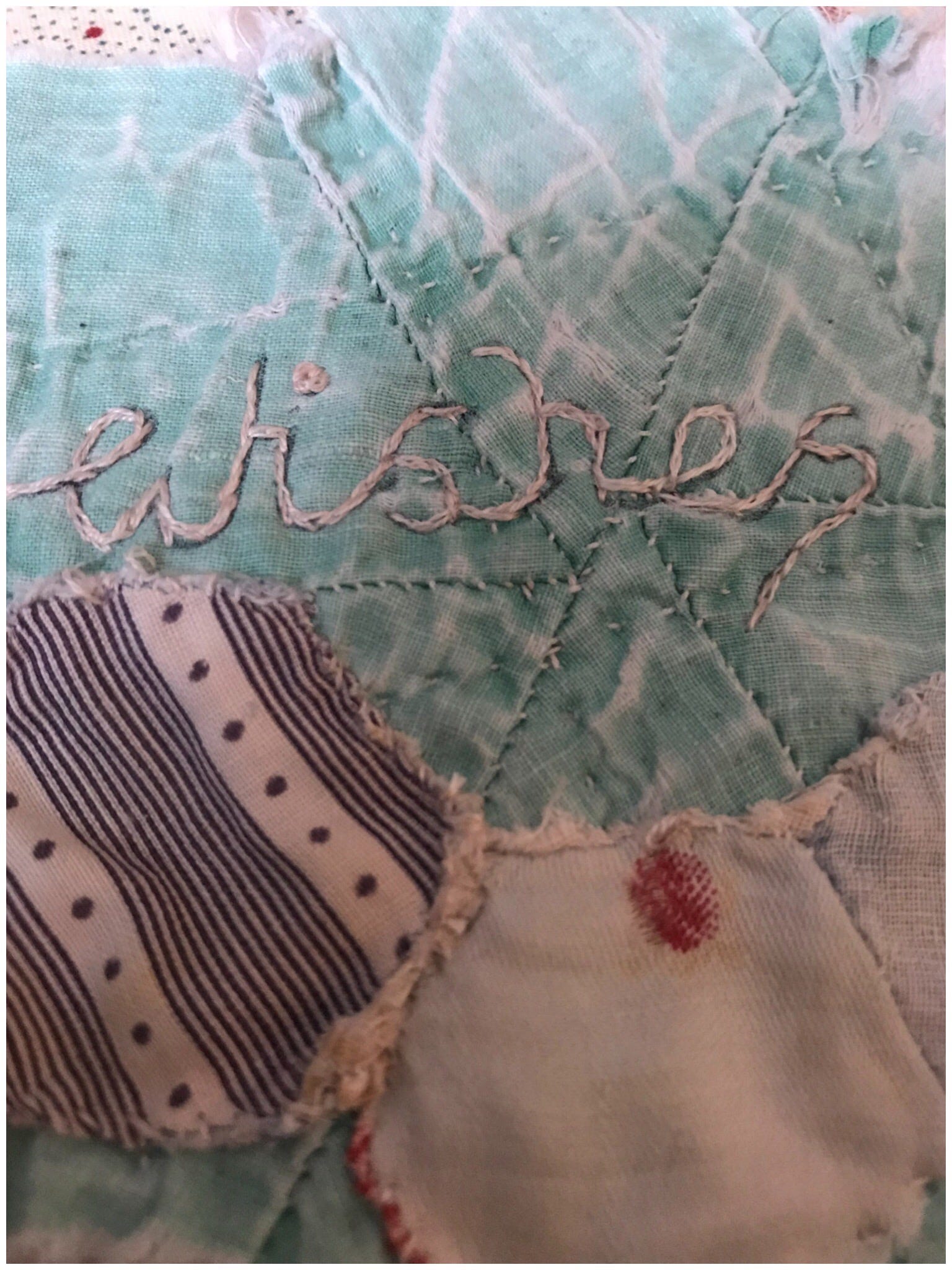
Slow stitch begins here.
In fragments.
A softened corner of an antique quilt, worn thin where a hand once rested night after night. A faded calico scrap, its pattern barely whispering through years of washing and weather. Pieces that have lived full, ordinary lives—held warmth, witnessed seasons, gathered stories in their fibres.
These are not perfect materials. They are not meant to be.
They arrive already marked by time—creased, frayed, sun-bleached, tender at the edges. And it is precisely this tenderness that invites us in. To notice. To listen. To work slowly, deliberately, with what has already endured.
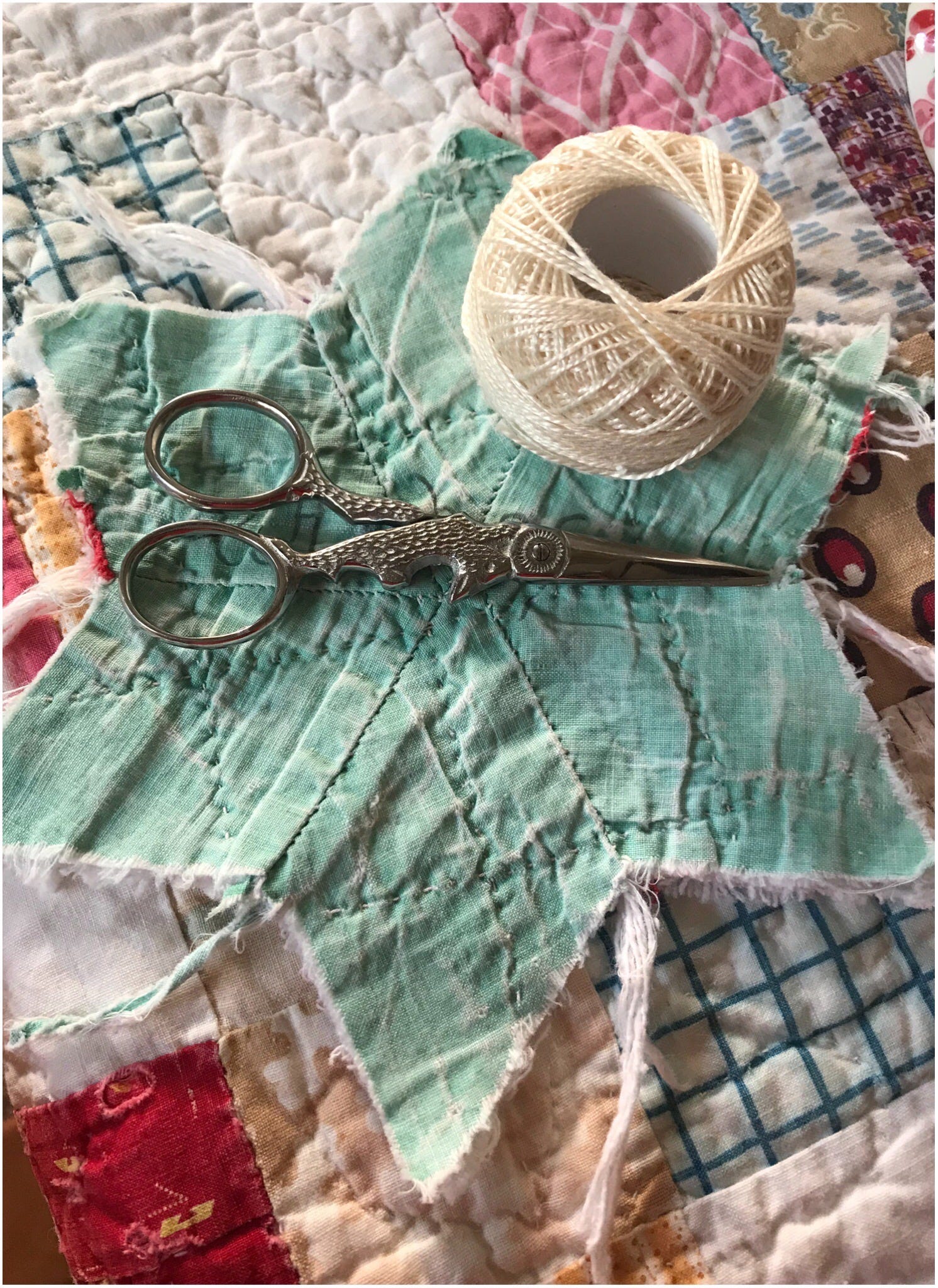
Each stitch becomes a gesture of attention.
Not to fix or restore, but to honour. To hold space for the quiet history embedded in cloth. To bring fragments together not into something new, but into something continuing.
There is a kind of magic in this practice—one that resists urgency.
In a world that asks us to move faster, produce more, and discard easily, slow stitch offers another way. A return to rhythm. To patience. To the small, almost invisible act of making something by hand, one stitch at a time.
You begin to see differently.
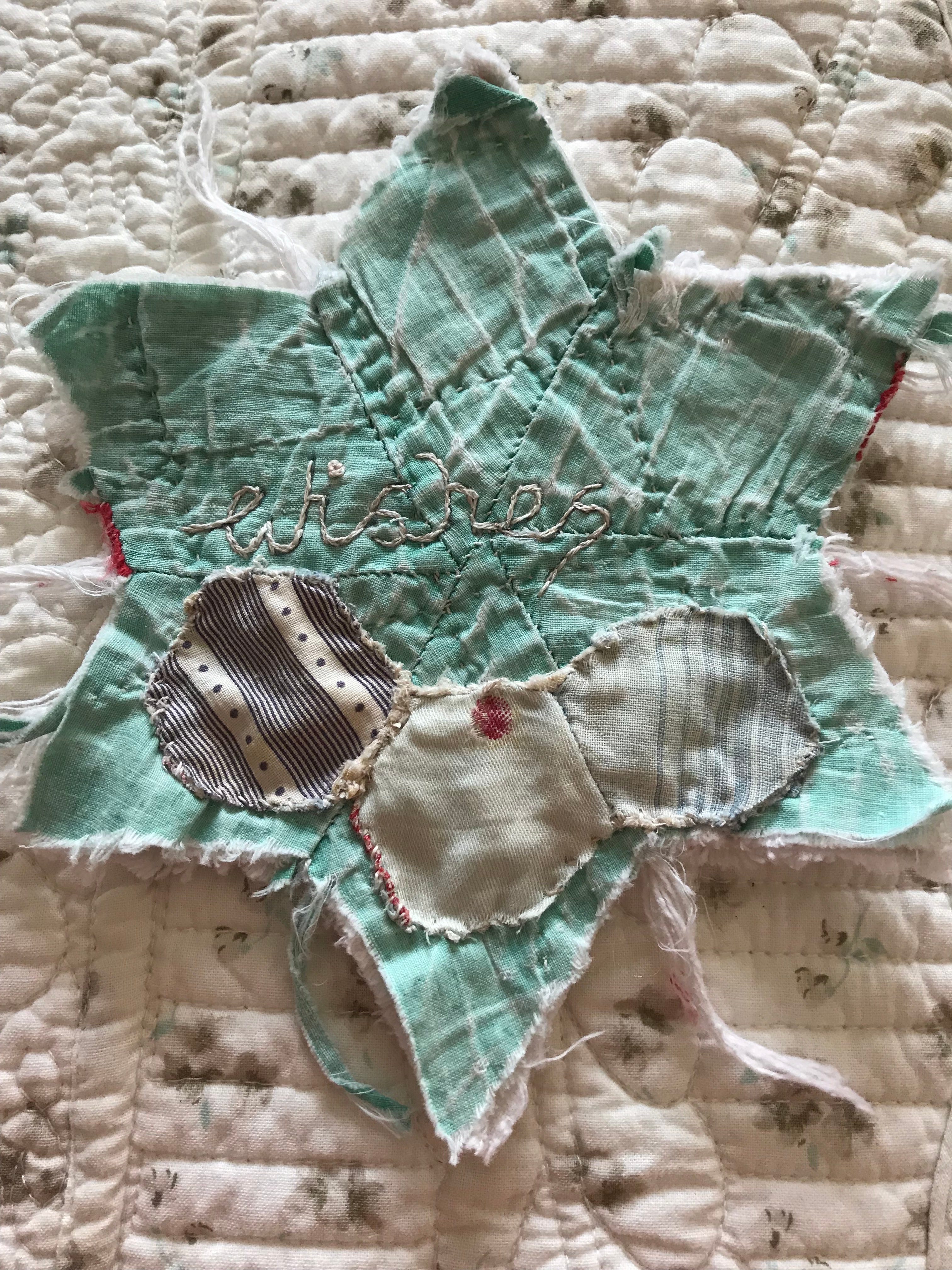
A scrap is no longer just a scrap. It is a memory. A possibility. A piece of weather, softened and carried forward.
And as your hands move, something else happens too.
You soften.
Your breath slows. Your thoughts untangle. The act of stitching becomes less about outcome, more about presence. Less about what you are making, more about how you are being while you make it.
This space—this gathering of fragments, thread, and time—is an invitation.
To those who are drawn to texture, to quiet beauty, to stories held in unexpected places. To those who find meaning in worn things. To those who feel the pull toward slower ways of seeing and making.
Here, we will explore these fragments together.
The cloth, yes—but also the stories they carry. The process of working with them. The gentle, imperfect beauty that emerges when we allow time to be part of the making.
If this speaks to something in you—something quiet, perhaps long overlooked—you are already part of this.
Stay.
There is more to notice.
More to gather.
More to stitch, slowly, into being.
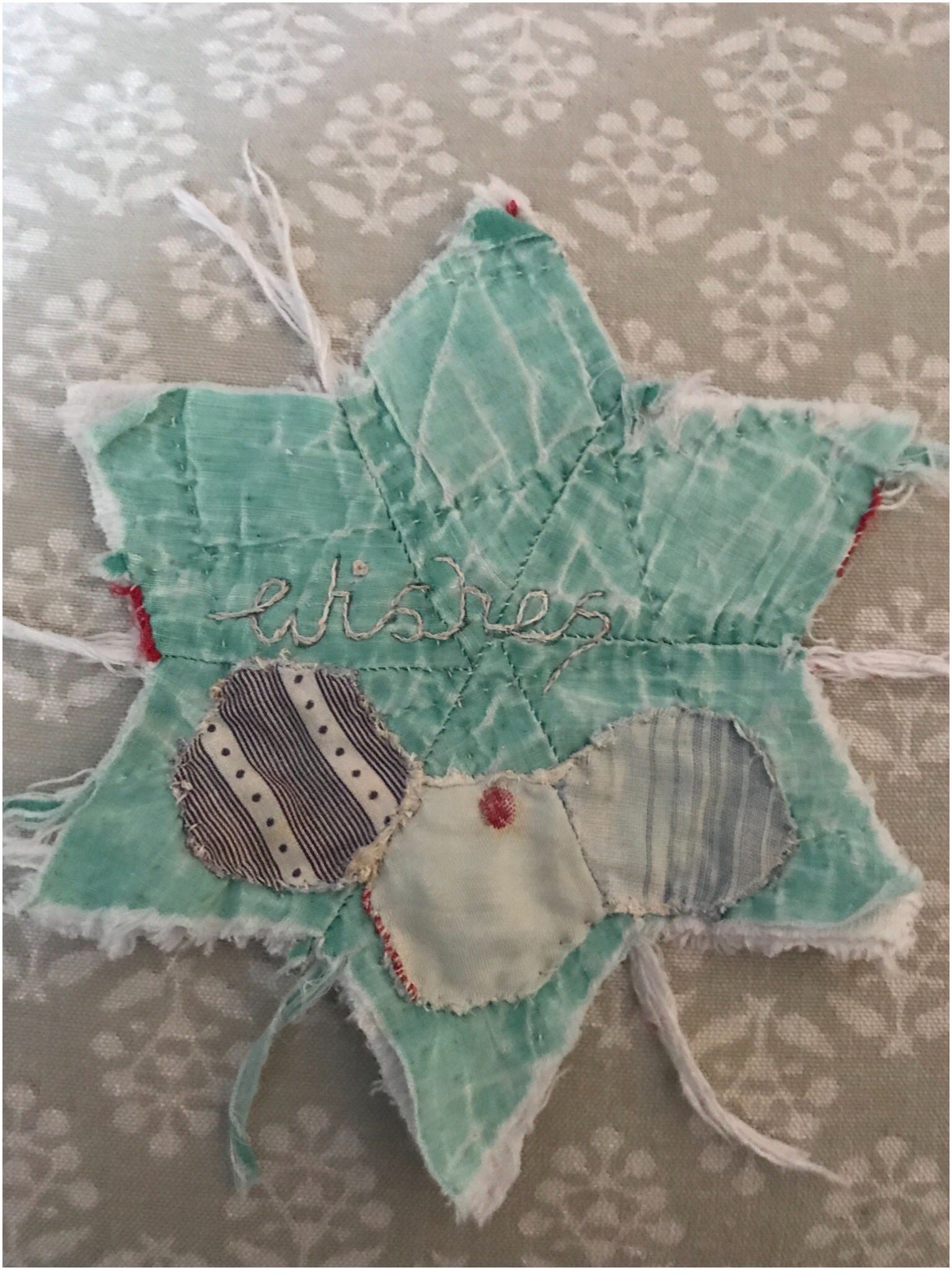
I find myself wondering if this is why some fragments begin to feel less like materials and more like companions. They quietly teach us another way of seeing.
Perhaps the cloth has been seeing us differently all along, patiently waiting until we learn to notice.